Note 01 · Planning
The four-hour window
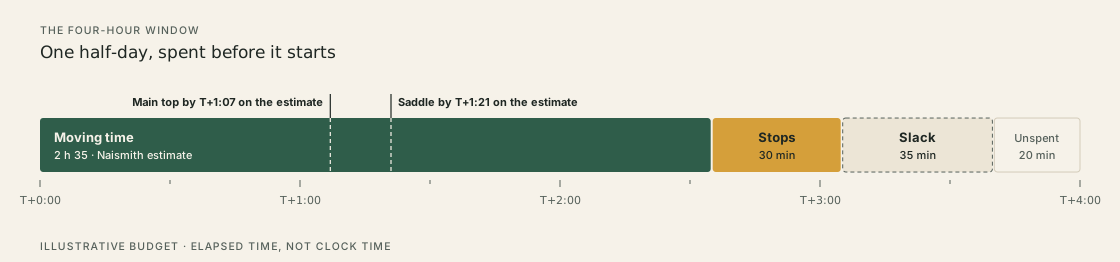
A half-day is a fixed container. Fill it on paper first: moving time, stops, slack, and a little left deliberately unspent.
2 sub-sections · 4 notes
Fitting a proper walk into four hours: budgeting the time, estimating the pace and choosing a route shape that can shrink.
A half-day is short enough to be easy to start and short enough to go wrong quickly. There is little room to absorb a slow climb or a missed turn, so the planning has to be honest about time.
These notes treat the half-day as a fixed window and work inward from its edges. Planning deals with the clock. Route Shapes deals with the line on the map and the places where it can be cut short.
Sub-section
The clock side of a short walk: a four-hour budget and the rule of thumb that fills its biggest line.
Note 01 · Planning
A half-day is a fixed container. Fill it on paper first: moving time, stops, slack, and a little left deliberately unspent.
Note 02 · Planning
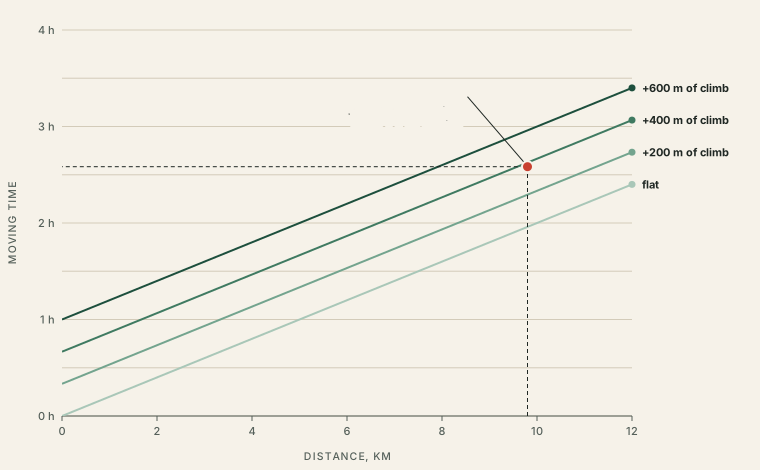
Twelve minutes a kilometre, ten minutes for every hundred metres of climb. The oldest rule of thumb in hill walking, and what it leaves out.
Sub-section
The line on the map: three basic shapes, and where a short walk can be made shorter without improvising.
Note 03 · Route Shapes
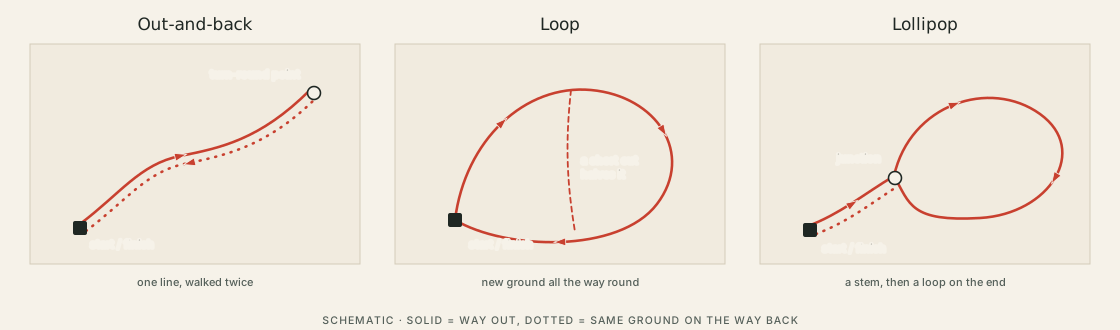
Three shapes for a short walk, compared by how much new ground they give and how easily they can be cut short.
Note 04 · Route Shapes
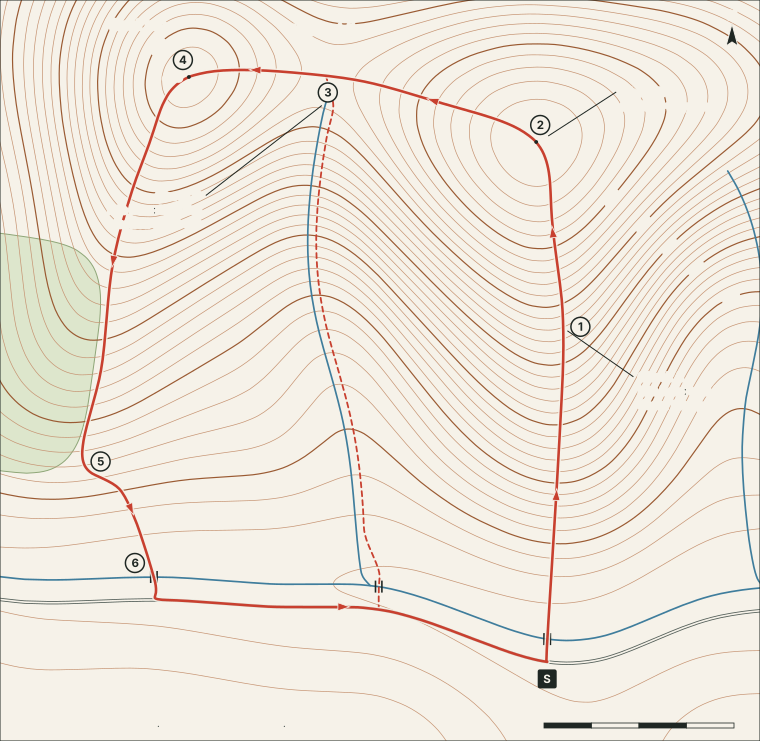
Three places on the sample loop where the watch is compared with the plan, and the one line that turns a late loop into a shorter one.